

 Deutsch
 Español
 Suomi
Suomi Français
 Bahasa Indonesia
 Italiano
 日本語
日本語 Português
 Tagalog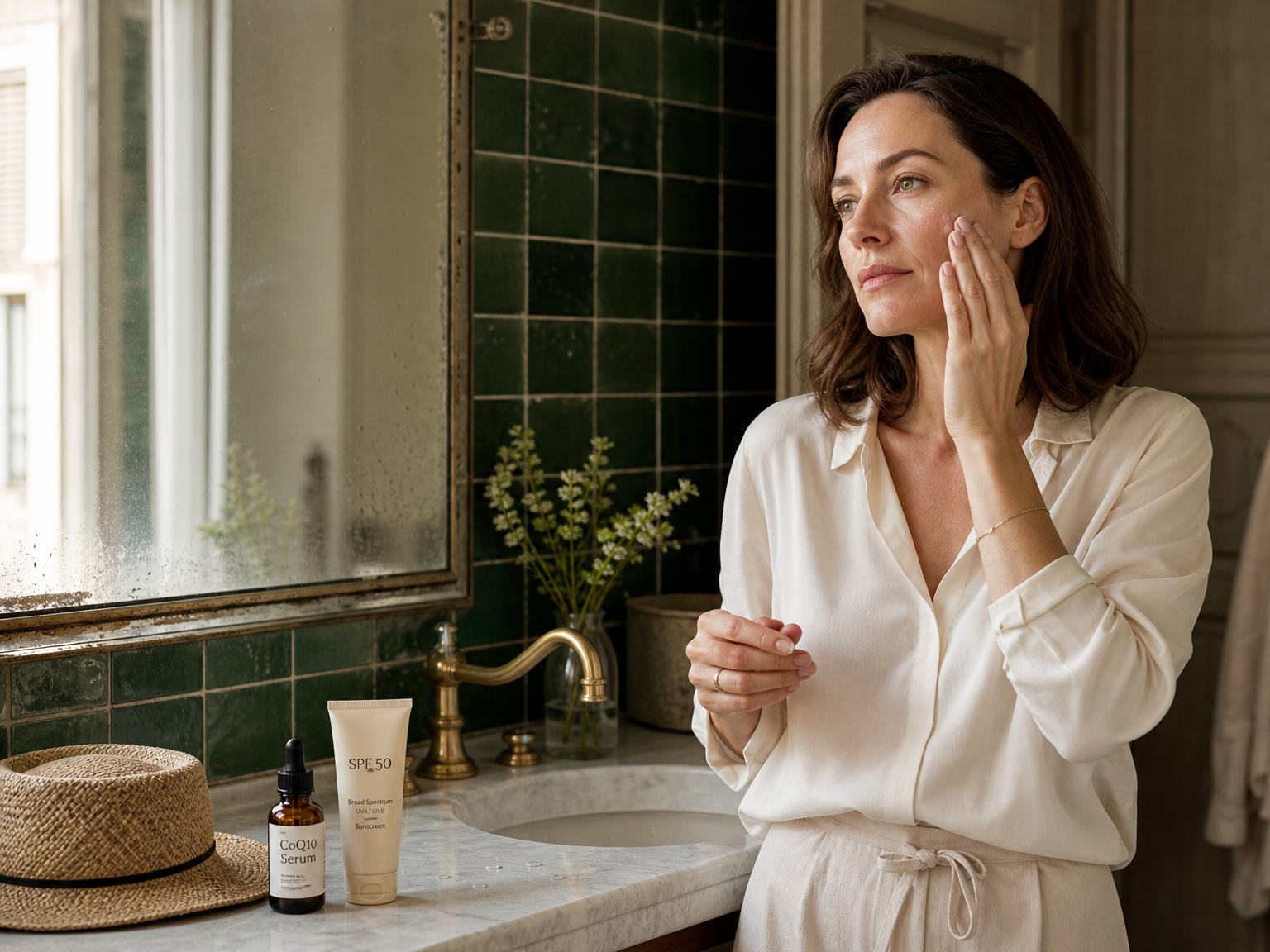

1. What is CoQ10?
Coenzyme Q10, usually shortened to CoQ10, is a compound your body makes naturally. It is found in cell membranes and is especially important in mitochondria, the parts of cells that turn food energy into usable energy.
CoQ10 also works as an antioxidant. In plain English, that means it can help neutralize unstable molecules called free radicals before they damage nearby fats, proteins, or DNA. Because UV radiation from sunlight is one source of oxidative stress in skin, CoQ10 often turns up in anti-aging and sun-care products alongside other antioxidants for skin.
The skin connection is worth looking at because CoQ10 levels appear to decline with age and UV exposure. That does not automatically mean that adding CoQ10 prevents sun damage. It does, however, give researchers a sensible question to test: could replacing CoQ10 in the skin help reduce some UV-related stress?
2. How UV exposure damages skin
Sunlight affects skin in more than one way. UVB rays are strongly linked with sunburn and direct DNA damage. UVA rays penetrate more deeply and contribute to oxidative stress, pigmentation changes, collagen breakdown, and long-term photoaging.
When skin is exposed to UV, it can produce more reactive oxygen species. These are chemically reactive molecules that can harm cell structures when they build up faster than the skin can deal with them. Over time, that process contributes to visible changes such as wrinkles, uneven tone, and loss of elasticity.
This is where topical antioxidants such as CoQ10 come into the picture. They are not shields in the way sunscreen is. The idea is more modest: they may help reduce some of the downstream oxidative stress that happens after UV reaches the skin.
3. Topical CoQ10: the most credible skin story
The strongest case for CoQ10 in sun-related skin care is for applying it to the skin. A 1999 study found that CoQ10 applied to skin could penetrate viable layers of the epidermis, reduce markers of oxidation, protect keratinocytes from UVA-related oxidative stress, and reduce wrinkle depth in a small human component.
A later study found that after 14 days of topical CoQ10 treatment, CoQ10 levels increased in the epidermis. In people whose untreated skin showed higher oxidative stress, treated sites had lower free-radical levels, and one CoQ10-containing formula improved skin antioxidant defenses.
These findings are useful, but they do not prove that CoQ10 prevents sunburn or stops UV skin damage in everyday life. Many of the outcomes were biomarkers: skin CoQ10 levels, oxidative-stress readings, mitochondrial activity, or wrinkle-related measures. Those markers can help explain how something might work, but they are not a substitute for larger trials measuring sunburn, pigmentation, precancerous changes, or long-term photoaging.
The fairest conclusion is this: topical CoQ10 looks like a reasonable supportive antioxidant for skin, especially in formulas aimed at photoaging. It is not a sunscreen, and it should not be used to spend longer in the sun.
4. Oral CoQ10: not proven to prepare skin for UV
The claims are weaker when CoQ10 is taken by mouth. It is plausible that oral CoQ10 could influence oxidative stress somewhere in the body. A 2022 systematic review and meta-analysis of randomized trials found improvements in some systemic oxidative-stress biomarkers, including total antioxidant capacity and malondialdehyde.
But systemic antioxidant markers do not tell us whether skin becomes more resistant to UV exposure.
The most relevant human trial gave healthy women aged 45–60 either 50 mg or 150 mg of oral CoQ10 daily for 12 weeks. The study found some cosmetic benefits, including reduced periorbital wrinkle area and less seasonal decline in skin viscoelasticity. However, it did not significantly improve minimal erythema dose. Put simply, oral CoQ10 did not convincingly raise the amount of UVB exposure the skin could tolerate before reddening.
A 2025 systematic review of oral photoprotection studies reached a similar broad conclusion. Across human studies, the best evidence was for ingredients such as polyphenols, carotenoids, and Polypodium leucotomos. Isolated vitamins or coenzyme Q supplementation had the weakest evidence.
So, if the question is “Can oral CoQ10 prepare my skin for sun exposure?” the evidence-based answer is: not reliably, based on current human research.
5. Recovery and repair: plausible, but not established
CoQ10 also appears in claims about helping skin recover after UV exposure. The science is interesting, but it is still early.
In cell studies, CoQ10 has been shown to reduce UV-related oxidative stress, preserve mitochondrial function, and help ATP levels recover after irradiation. ATP is the cell’s usable energy supply, so this could be relevant to repair processes. Other laboratory research suggests CoQ10 may influence inflammatory signaling, collagen-degrading enzymes, and pigmentation-related pathways after UVA or UVB exposure.
That sounds promising, but the leap from cell studies to after-sun recovery in real people is a big one. We do not yet have strong human trials showing that CoQ10 meaningfully speeds recovery from sunburn, reduces post-sun inflammation, prevents peeling, or repairs UV injury after a sunny day.
One indirect reality check comes from a 2024 trial in burn patients. CoQ10 at 300 mg per day for 10 days did not significantly improve oxidative-stress markers, inflammatory markers, or clinical outcomes. Burns are not the same as sun exposure, but the study is a useful reminder that antioxidant theory does not always lead to visible healing benefits.
 Topical evidence: CoQ10 can reach the epidermis and may support antioxidant status.
 Oral evidence: Human trials have not shown reliable UVB redness protection.
 Repair claims: Lab findings are promising, but after-sun human data are limited.
6. Practical considerations
If you are considering CoQ10 for skin, topical use has the more direct evidence. Look for it as part of a well-formulated antioxidant skincare product, not as a replacement for sunscreen. It may make the most sense in a morning or evening routine focused on photoaging, dryness, or general skin resilience.
For oral supplements, there is no established dose for UV protection because UV protection has not been proven. Skin studies have used doses such as 50 mg and 150 mg per day, while broader supplement studies often use doses in the hundreds of milligrams. Those broader dose ranges should not be treated as skin-specific recommendations.
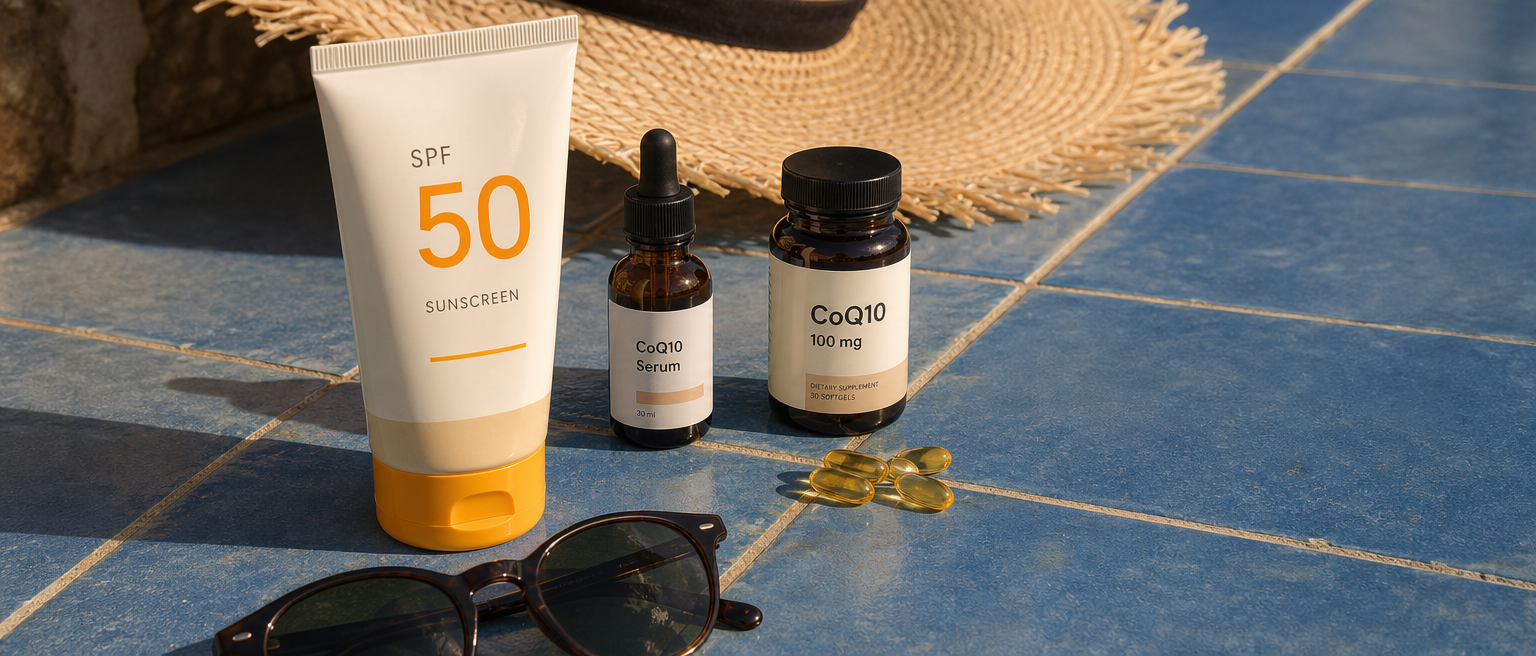
The practical sun-care hierarchy stays the same: broad-spectrum sunscreen, shade, hats, sunglasses, and protective clothing do the heavy lifting. CoQ10, if you use it, belongs in the “supportive skincare” category.
7. Safety
CoQ10 is generally well tolerated in supplement studies. Official sources note that serious side effects have not been commonly reported, though mild digestive upset, nausea, rash, and insomnia can occur.
There are important cautions. CoQ10 may interact with warfarin and other coumarin-type anticoagulants. Guidance also flags possible concerns for people using insulin, blood-pressure medicines, or some cancer treatments. If any of those apply to you, check with a healthcare professional before using CoQ10 supplements, especially at higher doses.
Topical CoQ10 is usually sold as a cosmetic ingredient, but sensitive skin can still react to formulas. Patch testing a new product is sensible, particularly if you have eczema, rosacea, or a history of irritation from active skincare.