Selenium for Acne and Skin Inflammation: Benefits, Risks, and What the Evidence Says
Selenium plays a real role in antioxidant defense and immune balance, which helps explain why it gets attention for acne and inflamed skin. But the clinical evidence for oral selenium as an acne treatment remains limited, and dosing deserves caution.
Limited evidence
General audience
Supplement review
Quick Summary: Selenium is relevant to skin health because it supports antioxidant enzymes and inflammatory balance, and lower selenium levels are often reported in acne and other inflammatory skin conditions. But current human trials do not clearly show that selenium supplements reliably improve acne, while excessive intake can cause harm.
Why Selenium Gets Attention in Skin Health
Selenium is a trace mineral your body needs in small amounts, but it has an outsized role in antioxidant defense and immune regulation. It is built into selenoproteins such as glutathione peroxidases and thioredoxin reductases, which help control oxidative stress and inflammatory signaling. Because acne and other inflammatory skin conditions involve both oxidation and inflammation, selenium often comes up in discussions about skin support.
The biology is plausible. When skin is inflamed, reactive molecules increase, and antioxidant systems help keep that process from escalating. Selenium status may also affect immune-cell behavior, redox balance, and inflammatory pathways that are relevant to acne. Still, a sensible mechanism is not the same as proof of clinical benefit.
That distinction matters. Selenium appears to follow a U-shaped pattern in health: too little may be harmful, but more is not always better. If someone has low selenium intake or status, correcting that may help normalize normal skin defenses. If someone is already sufficient, extra selenium may offer little benefit and may increase risk.
Place inline-image-1.jpg in the same folder as this HTML file
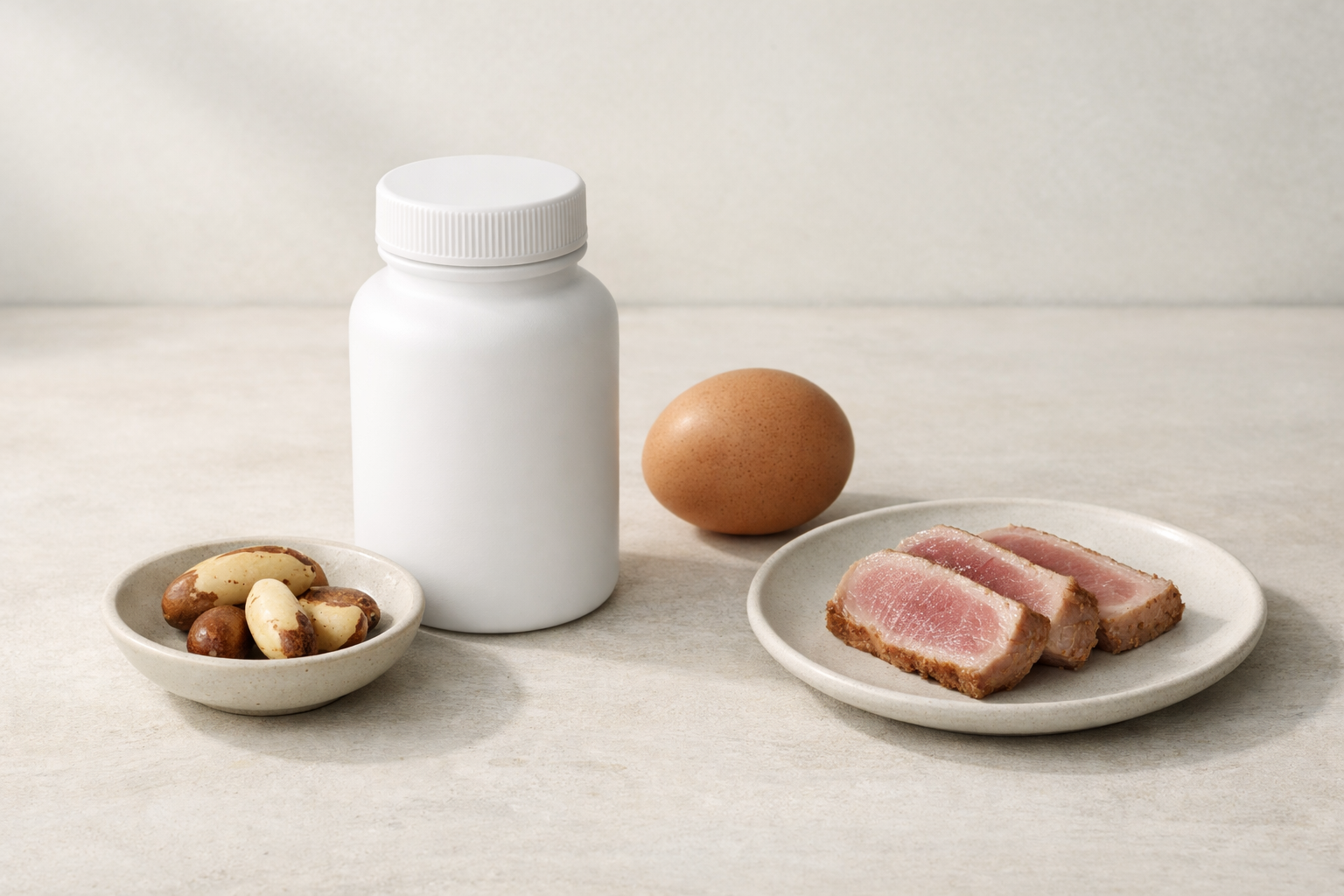
Selenium comes from foods such as fish, eggs, and some nuts, as well as supplements. Intake adequacy matters more than assuming higher doses will improve skin.
What Human Studies Suggest
The human evidence is more cautious than the theory. Observational studies often find lower selenium levels in people with acne vulgaris, psoriasis, and atopic dermatitis compared with healthy controls. Meta-analytic and case-control data also suggest that lower selenium status may track with greater acne severity.
That is interesting, but it does not prove selenium deficiency causes acne. Lower selenium could reflect diet quality, inflammation, overall health, or the way illness changes nutrient levels. In other words, selenium may be a marker of disease burden rather than a direct treatment lever.
Intervention data are much thinner. The main acne-specific oral selenium trial used 200 mcg daily for 8 weeks and reported improvements in antioxidant and inflammatory biomarkers, including glutathione, malondialdehyde, and IL-8. However, the selenium-only reduction in inflammatory lesions was not statistically convincing. In practical terms, the study hints that selenium may affect acne-related biology, but it does not clearly show that selenium alone meaningfully clears acne.
There is also indirect evidence from women with polycystic ovary syndrome, a group in which acne is common, suggesting that 200 mcg daily improved some inflammatory markers and acne-related outcomes. But that is not the same as showing benefit for acne in the general population, and the study should be treated as hypothesis-generating rather than decisive.
What looks promising
Lower selenium status is repeatedly associated with acne and other inflammatory skin conditions, and short trials suggest selenium can influence oxidative and inflammatory biomarkers.
What remains unproven
Current trials do not clearly show that oral selenium reliably improves acne severity in selenium-replete adults, and evidence from other skin conditions is mixed.
“The mechanistic case is stronger than the clinical case.”
Practical Takeaways
Think adequacy, not aggressive dosing
The most practical interpretation of the evidence is that selenium matters most when intake is low. If someone is not meeting basic nutritional needs, restoring adequacy may support normal antioxidant and immune function, including in the skin. That is different from assuming high-dose supplementation will treat acne.
Food and overall context still matter more
Selenium is one piece of a bigger picture that includes overall diet quality, hormones, inflammation, skin care, and medical factors. If acne is persistent, widespread, scarring, or accompanied by symptoms such as irregular periods, it makes more sense to look at the broader clinical picture than to focus on one nutrient alone.
For many people, a food-first approach is the most sensible starting point. Selenium can be found in foods such as fish, eggs, and some nuts, though content can vary. Anyone using a multivitamin or separate mineral supplement should also count those sources before adding more.
Safety, Dosing, and Risks
Selenium is one of those nutrients where the gap between enough and too much is narrower than many consumers assume. The adult recommended intake is 55 mcg per day. The U.S. Office of Dietary Supplements lists 400 mcg per day as the adult tolerable upper intake level, while EFSA uses a more conservative adult upper limit of 255 mcg per day.
That means common supplement doses such as 200 mcg daily are not trivial, especially if a person already gets selenium from food or takes a multivitamin. Most skin-related oral trials used about 200 mcg daily for only 4 to 8 weeks, and even at that level the evidence does not support routine supplementation for acne in selenium-replete adults.
Excess selenium can cause hair loss, brittle nails or nail loss, skin rash, garlic breath, metallic taste, nausea, diarrhea, fatigue, and neurologic symptoms. Long-term safety also deserves respect: in one large randomized trial involving people with prior skin cancer, 200 mcg daily did not prevent basal cell carcinoma and was associated with higher rates of some nonmelanoma skin cancers.
The Cautious Bottom Line
Selenium has real biological relevance to skin health, and low selenium status does appear to be associated with acne and some inflammatory skin diseases. That makes it a reasonable nutrient to pay attention to as part of overall nutritional sufficiency.
What current research does not show is that oral selenium is a reliable stand-alone acne treatment. Observational studies suggest a link, but they cannot prove cause and effect. Clinical trials are small and not convincing enough to support broad supplementation.
For most people, the sensible goal is adequate intake rather than high-dose use. Selenium may be part of the story when status is low, but it is not a proven shortcut for clearing acne.

 Deutsch
 Español
 Suomi
Suomi Français
 Bahasa Indonesia
 Italiano
 日本語
日本語 Português
 Tagalog