

 Deutsch
 Español
 Suomi
Suomi Français
 Bahasa Indonesia
 Italiano
 日本語
日本語 Português
 Tagalog

1. What protein does for skin
Protein is not just a gym nutrient. It is everyday maintenance material for the whole body, including the skin. When you eat protein, your body breaks it down into amino acids, then uses those amino acids to repair cells, make new ones, build enzymes, and form structural proteins such as collagen and elastin.
Skin is a protein-rich tissue that is always renewing itself. The outer barrier sheds and rebuilds. The deeper dermis remodels collagen. Immune cells step in when there is injury or infection. Each of these jobs depends on a steady supply of amino acids.
For basic daily needs, official guidance is fairly modest. EFSA sets the adult protein reference intake at 0.83 grams per kilogram of body weight per day. MedlinePlus notes that healthy adults are generally advised to get 10% to 35% of calories from protein. That does not mean everyone should aim for the high end. Protein needs vary with body size, diet pattern, age, training, illness, and healing demands.
For sun-damaged skin, the main takeaway is straightforward: too little protein can be a problem. Once your needs are met, more protein is not automatically better.
2. How UV exposure stresses skin
Sunlight affects skin in several ways. Ultraviolet radiation can create oxidative stress, meaning reactive molecules build up faster than the skin can neutralize them. UV exposure can also trigger inflammation, redness, pigment changes, DNA damage, and enzymes that break down collagen.
A short, intense exposure may show up as sunburn. Smaller repeated exposures over many years can contribute to photoaging: fine lines, uneven pigmentation, rough texture, reduced elasticity, and visible blood vessels.
Protein and amino acids may fit into this picture in three broad ways.
First, they provide the raw material for skin repair. Collagen, enzymes, immune proteins, and new skin cells all require amino acids.
Second, some amino acids help make skin-protective molecules. A recent mechanistic review describes several examples: histidine can be converted into urocanic acid, a UV-absorbing molecule in the outer skin layer; tyrosine is used to make melanin, the pigment that absorbs visible and UV radiation; arginine metabolism contributes to urea production, which helps with skin hydration.
Third, amino acids can shape the skin’s stress response. Cysteine is used to make glutathione, one of the body’s major antioxidant systems. Arginine and glutamine have roles in immune function, nitrogen balance, collagen formation, and wound repair.
The biology makes sense. The more difficult question is whether supplements reliably change visible or clinical outcomes after sun exposure.
3. What the evidence says
The evidence is mixed, but it is useful when read with some caution.
 Adequacy first: Protein is required for repair, but extra intake is not proven as a sun-recovery strategy.
 Peptide data: Collagen shows modest skin-quality benefits; cysteine peptide data is still early.
 Clinical context: Arginine and glutamine signals come mainly from wounds, burns, or critical care.
- Adequate protein is foundational, but extra protein is not proven as a sun-repair strategy. General nutrition references are clear that protein is needed to repair cells and make new ones. In medical wound care, protein targets often rise when tissue damage is serious. For example, pressure-ulcer guidance may aim for 1.25 to 1.50 grams per kilogram per day when intake is inadequate and the goal is positive nitrogen balance. But pressure ulcers are not ordinary sun exposure. These clinical targets should not be copied casually by healthy adults with mild UV stress.
- Arginine and glutamine appear more relevant in injury than in everyday sun exposure. A systematic review and meta-analysis on arginine and glutamine found signals for wound-related outcomes across surgical, burn, pressure-ulcer, and critical-care populations. Arginine was linked with collagen deposition outcomes, while glutamine was linked with nitrogen balance and shorter healing time in some trials. A separate burn-patient review found glutamine was associated with shorter hospital stays, better wound-healing rates, shorter healing time, and fewer wound infections. Even there, the authors were cautious because many positive findings came from smaller studies. This supports the idea that amino acids can be important under severe tissue stress, but it does not prove that glutamine or arginine supplements help a healthy person recover from a day in the sun.
- Collagen peptides have the most consistent evidence for skin quality. Collagen is a protein rich in amino acids such as glycine, proline, and hydroxyproline. In a systematic review of 26 randomized trials, hydrolyzed collagen improved skin hydration and elasticity compared with placebo, with benefits appearing more likely after at least 8 weeks. A photoaging-focused review also found collagen among the supplement categories with positive effects on photoaging measures or elasticity. A 12-week randomized trial of low-molecular-weight collagen peptides in 100 healthy adults reported improvements in wrinkle-related measures. The catch: these studies mostly look at hydration, elasticity, wrinkles, and surface-skin outcomes. They do not show true reversal of UV-induced DNA damage.
- Cysteine peptides are promising but early. One human randomized placebo-controlled trial gave adults 48 mg per day of cysteine peptides for 5 weeks. The study reported an increased minimal erythema dose, meaning more UV-B exposure was needed to produce redness, along with improvements in UV-B-induced pigmentation measures. No supplement-related adverse events were reported. This is directly relevant to UV response, but it is still one trial in a specific group of adults, with industry involvement disclosed. It needs independent replication.
- Soy protein with isoflavones may help some photoaging markers. In a 24-week randomized trial in postmenopausal women, 30 grams per day of soy protein containing 50 mg isoflavones reduced wrinkle severity and facial pigment intensity and increased cheek hydration. This is interesting, but it is not proof that protein alone caused the effect. Isoflavones are bioactive plant compounds and may explain much of the result.
4. Practical considerations
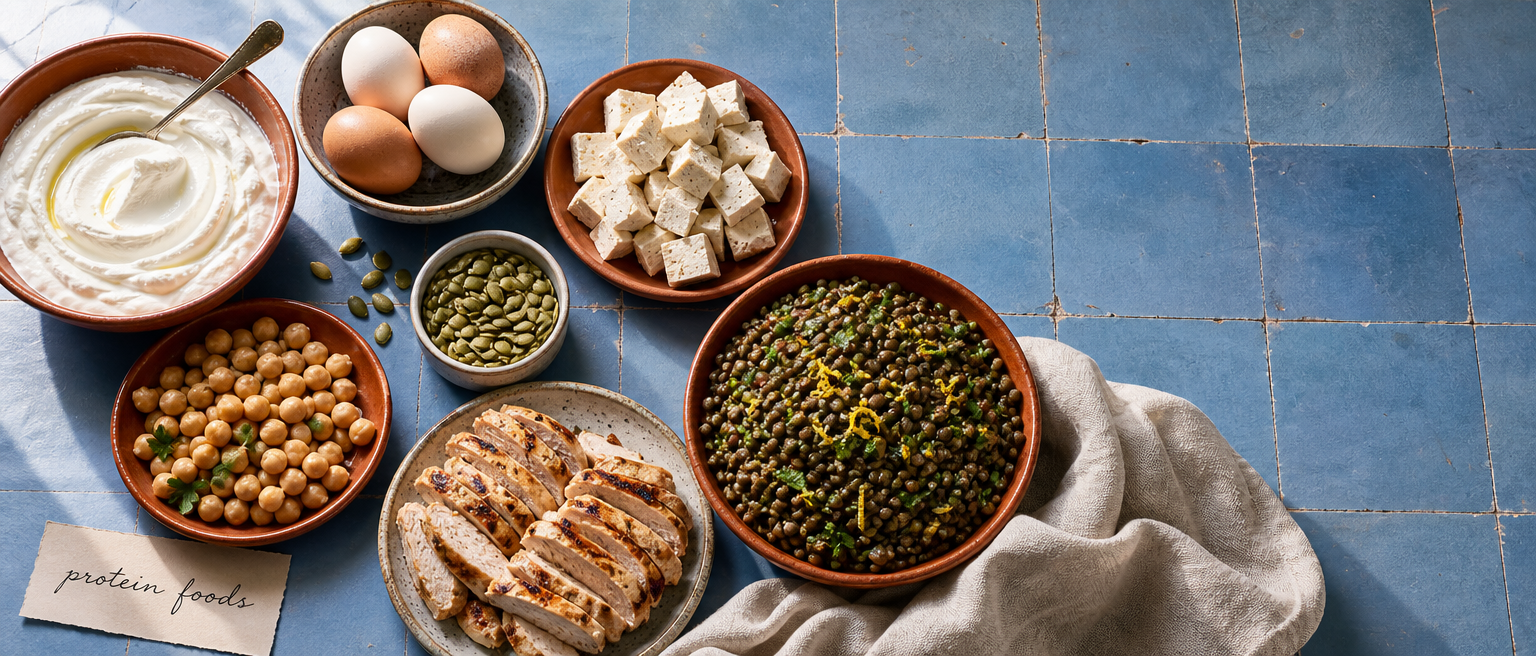
Start with the basics before thinking about supplements. If your diet is low in protein, improving intake from normal foods is the most evidence-aligned first step. Good options include fish, eggs, dairy, poultry, lean meat, tofu, tempeh, beans, lentils, nuts, seeds, and balanced protein powders when food intake is difficult.
A practical adequacy anchor is about 0.8 to 0.83 grams per kilogram per day for adults. For a 70 kg adult, that is roughly 56 to 58 grams daily. Some people may need more, including older adults, people dieting, very active people, and those healing from injury or surgery. Those needs are best individualized.
For collagen peptides, many skin trials use daily intake for at least 8 to 12 weeks, often in the range of roughly 1 to 10 grams per day depending on the product and study. Effects, when they happen, tend to be gradual and modest.
For single amino acids, the case is less clear for healthy skin exposed to sun. Arginine and glutamine have a stronger rationale in clinical wound and burn settings than in everyday skincare. Cysteine peptides have intriguing UV-specific data, but the evidence is too early for firm recommendations.
The most reliable approach is still layered protection: use broad-spectrum sunscreen, seek shade, wear protective clothing, avoid burning, and eat enough total protein as part of a varied diet.
5. Safety
Normal dietary protein intake is generally safe for healthy adults. Short-term collagen, soy, and cysteine peptide trials reviewed here were generally well tolerated, but supplement evidence is often product-specific and short-term.
Be more cautious with high-protein diets or amino-acid and peptide supplements if you have kidney disease, liver disease, cancer, a major medical condition, or a history of eating disorder, or if you are pregnant, breastfeeding, preparing for surgery, or taking medication. Soy products may not suit everyone, and collagen is usually animal-derived, which may matter for allergies, diet preferences, or religious reasons.
Supplement quality also varies. Look for clear ingredient lists, realistic claims, and third-party testing where possible.