

 Deutsch
 Español
 Suomi
Suomi Français
 Bahasa Indonesia
 Italiano
 日本語
日本語 Português
 Tagalog
Summary
Vitamin B12 is an essential nutrient needed for DNA synthesis, red blood cell formation, nerve function, and normal homocysteine metabolism. Supplementation is most clearly useful for preventing or correcting deficiency, especially in vegans, many older adults, people with pernicious anemia or gastrointestinal causes of malabsorption, and some users of metformin or long-term acid suppressants.
Research also shows that high-dose oral B12 can often correct deficiency, so injections are not always necessary. Outside deficiency care, the evidence does not support vitamin B12 as a dependable energy, mood, memory, or heart-protection supplement in people who already have adequate status.
Quick Facts
What is it useful for?
Vitamin B12 is useful for preventing and correcting deficiency and for supporting normal red blood cell, nerve, DNA, and homocysteine functions.
Supplement types
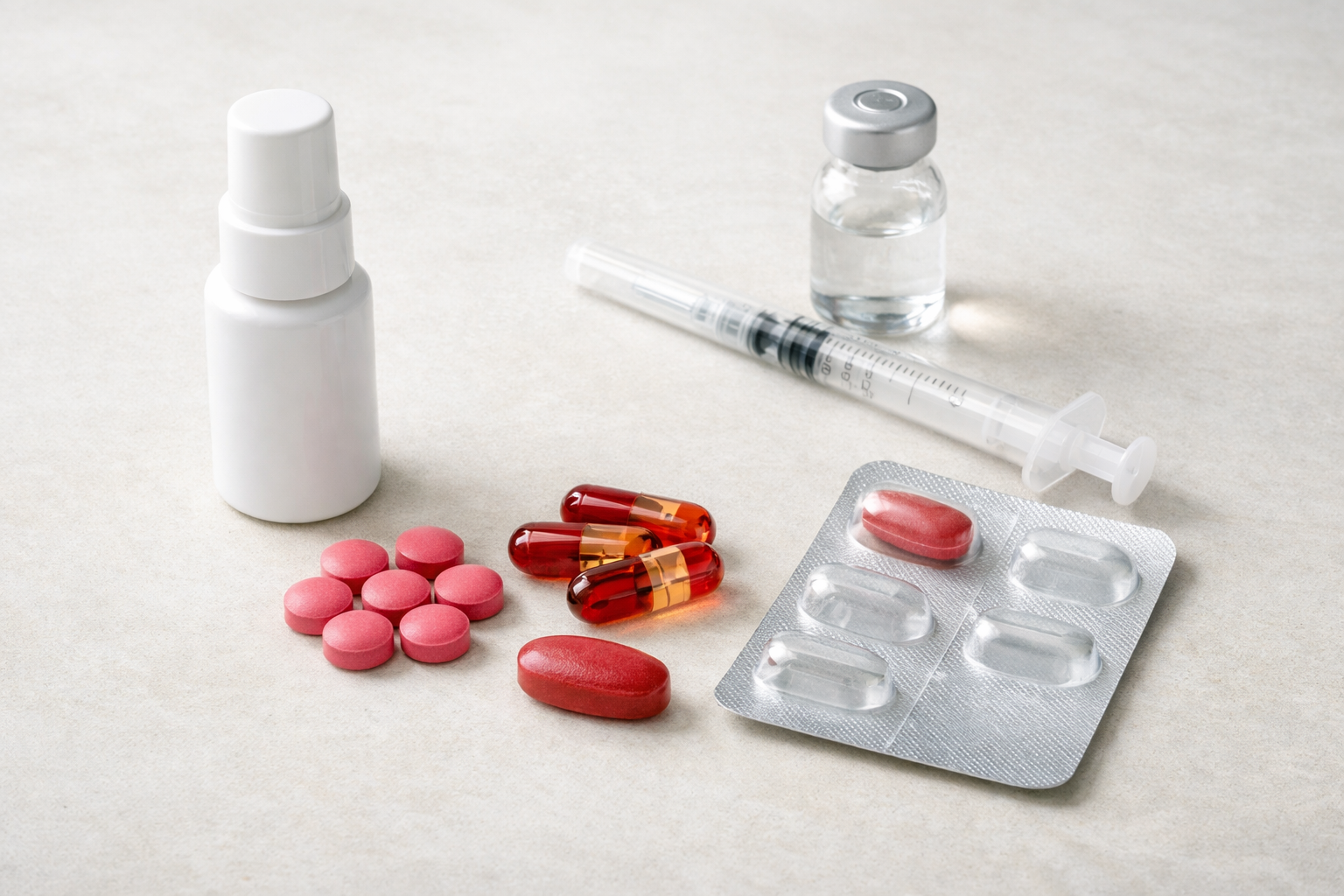
Supplements are sold as cyanocobalamin, methylcobalamin, adenosylcobalamin, and hydroxycobalamin, in tablets, lozenges, sprays, and injections.
Interactions
Folic acid can mask the anemia of B12 deficiency while neurological damage continues. Metformin and long-term acid suppression can also increase deficiency risk.
Side effects
Vitamin B12 is generally well tolerated, and serious adverse effects from standard oral supplementation are uncommon in the general population.
Other possible benefits
It lowers homocysteine and may help selected deficient or metformin-treated patients, but broad energy, mood, memory, or heart claims are not well supported.
Regulatory status
In the US it is a lawful dietary supplement ingredient with claim limits; in the EU only authorised function claims may be used and disease claims are barred.
What We Already Know About It
Established physiological role. Vitamin B12 is an essential nutrient rather than an optional performance supplement. It is required for normal DNA synthesis, red blood cell production, neurological function, and homocysteine metabolism. Deficiency is well documented to cause megaloblastic anemia and can also produce neurological symptoms that may become irreversible if treatment is delayed. Its absorption is unusually complex: food-bound B12 must be released in the stomach, bind to carrier proteins, then bind intrinsic factor for uptake in the terminal ileum. Because that pathway can fail at several points, deficiency can occur even when dietary intake appears adequate. NIH Office of Dietary Supplements — Vitamin B12 Fact Sheet; Linus Pauling Institute — Vitamin B12
Best-supported use. The strongest evidence supports supplementation for prevention or treatment of deficiency, especially in vegans, older adults, people with pernicious anemia, gastrointestinal disease or surgery, and users of metformin or long-term acid suppression. Evidence is also reasonably strong that high-dose oral therapy can often correct biochemical deficiency because a small amount is absorbed passively even when intrinsic factor-dependent uptake is impaired. By contrast, evidence is much weaker or negative for claims that extra B12 improves energy, memory, mood, or cardiovascular outcomes in people who are already replete. NICE/NCBI Bookshelf — Vitamin B12 Deficiency in Over 16s; Cochrane Review — Oral vs Intramuscular Vitamin B12; Review — Vitamin B12, Cognition, Depression, and Fatigue; Meta-analysis — B Vitamins, Homocysteine, and Cardiovascular Outcomes
Summary of Relevant Scientific Research
Deficiency and Absorption Basics — NIH Office of Dietary Supplements & Linus Pauling Institute
Institutional reviews agree that vitamin B12 is essential for DNA synthesis, red blood cell formation, and neurological function, and that deficiency can lead to megaloblastic anemia and neurologic problems. They also outline the absorption pathway and identify major risk groups, including vegans, older adults, people with pernicious anemia or gastrointestinal disease, and some medication users. NIH Office of Dietary Supplements — Vitamin B12 Fact Sheet; Linus Pauling Institute — Vitamin B12
Oral Replacement Can Work — Cochrane Review, 2025 Meta-analysis & OB12 Trial
Across a limited but clinically important evidence base, high-dose oral B12, usually 1,000 to 2,000 micrograms daily, appeared broadly comparable with intramuscular therapy for correcting serum B12 in many deficient adults. The OB12 pragmatic trial in older primary-care patients also found that both routes normalized levels in most participants, while underscoring the importance of adherence and follow-up with oral therapy. Cochrane Review — Oral vs Intramuscular Vitamin B12; 2025 Meta-analysis — Oral vs Intramuscular Vitamin B12; OB12 Pragmatic Trial
Energy, Mood, and Memory Claims — Review and Meta-analysis
Reviews found no convincing evidence that vitamin B12 alone or in B-complex formulas improves cognition or depressive symptoms in people without clear deficiency. Evidence for fatigue relief in otherwise nondeficient people was also insufficient, which challenges the idea of B12 as a universal brain or energy enhancer. Review — Vitamin B12, Cognition, Depression, and Fatigue; Meta-analysis — B Vitamins and Cognition in Older Adults
Homocysteine Falls, Outcomes Less Clear — Meta-analysis and Meta-regression
B12-containing interventions can lower homocysteine, which fits its biochemical role in one-carbon metabolism. However, pooled clinical data did not clearly show broad reductions in cardiovascular disease, coronary events, myocardial infarction, cardiovascular death, or all-cause mortality, although some analyses suggested a modest stroke signal. Meta-analysis — B Vitamins, Homocysteine, and Cardiovascular Outcomes; Meta-regression — Vitamin B12 and Homocysteine
Targeted Use in Metformin-Treated Patients — Systematic Review and Neuropathy Meta-analysis
Evidence suggests metformin can contribute to lower B12 status, and supplementation can correct biochemical deficiency in this group. Some studies also reported improvement in neuropathy symptoms, but the evidence was heterogeneous and often relied on mixed interventions, so the most supported interpretation is targeted use in at-risk people rather than a universal neuropathy claim. Systematic Review — Metformin and Vitamin B12; Meta-analysis — Vitamin B12 in Diabetic Neuropathy
Beliefs, Myths & Unproven Claims
B12 boosts energy and mental sharpness for everyone
This is one of the most common claims, but the evidence does not support it as a general rule. Randomized trial reviews did not show clear benefit for cognition or depressive symptoms in people without overt deficiency, and evidence for fatigue relief in otherwise nondeficient people was also inadequate. Review — Vitamin B12, Cognition, Depression, and Fatigue; Meta-analysis — B Vitamins and Cognition in Older Adults
Injections are always better than tablets or sprays
Modern evidence is more nuanced. Injections remain important in some severe malabsorption states and lifelong replacement settings, but high-dose oral therapy often performs similarly for biochemical correction in many patients. The route should match the cause of deficiency, adherence, and follow-up needs rather than a simple assumption that injections are inherently superior. Cochrane Review — Oral vs Intramuscular Vitamin B12; 2025 Meta-analysis — Oral vs Intramuscular Vitamin B12; NICE/NCBI Bookshelf — Vitamin B12 Deficiency in Over 16s
Methylcobalamin is clearly superior and lower homocysteine means heart protection
The article does not support routine superiority of one common supplemental form over another for standard use, and official sources note no clear evidence that oral and sublingual delivery differ meaningfully in effectiveness. Likewise, although B12 can lower homocysteine, clinical trials do not show that this automatically translates into broad cardiovascular protection. NIH Office of Dietary Supplements — Vitamin B12 Fact Sheet; Meta-analysis — B Vitamins, Homocysteine, and Cardiovascular Outcomes; Meta-regression — Vitamin B12 and Homocysteine
Detailed Research Observations
Deficiency disease explains why B12 stands out
Vitamin B12 is unusual among supplements because its strongest credibility comes from modern deficiency-disease research rather than from wellness marketing or traditional use. The discovery of B12 and its role in pernicious anemia transformed what had often been a fatal condition into a treatable one, making B12 one of the clearest examples of a supplement with a well-established medical purpose. That history matters because it frames B12 not as a vague “health booster,” but as a nutrient with a direct and documented role in correcting a specific physiological problem. Historical Review — Vitamin B12 Discovery and Pernicious Anemia
Absorption is complicated, so deficiency is not just about diet
B12 absorption is more complex than many consumers realize. Food-bound B12 must first be released by stomach acid, then handled by binding proteins, pancreatic enzymes, intrinsic factor, and terminal ileal uptake. That means deficiency can develop from low intake, but also from autoimmune loss of intrinsic factor, atrophic gastritis, gastrointestinal surgery, intestinal disease, or medication effects. This is why a person can have an apparently adequate intake on paper and still become deficient. Linus Pauling Institute — Vitamin B12; NIH Office of Dietary Supplements — Vitamin B12 Fact Sheet
The same mechanistic picture helps explain who is most likely to need supplementation: vegans, many older adults, people with pernicious anemia, those with gastric or ileal surgery, some people with bowel disease, and users of metformin or long-term acid suppression. The source also notes that deficiency should not be dismissed simply because anemia or macrocytosis is absent, since neurological effects can appear without the classic blood picture. NICE/NCBI Bookshelf — Vitamin B12 Deficiency in Over 16s; Meta-analysis — Proton Pump Inhibitors and B12 Deficiency
Supplement form matters less than many labels imply
Consumers often see cyanocobalamin, methylcobalamin, adenosylcobalamin, or hydroxycobalamin and assume the most advanced-sounding form must be best. The evidence summarized here does not justify that assumption for routine supplementation. Official sources note that cyanocobalamin is common, other forms are also used, and oral and sublingual delivery do not appear meaningfully different in effectiveness for standard use. NIH Office of Dietary Supplements — Vitamin B12 Fact Sheet
The article also points out a market difference between regions: hydroxocobalamin is more commonly used in Europe, while cyanocobalamin is especially common in the United States. That reflects clinical practice patterns and product availability more than established across-the-board superiority for consumers. NCBI Bookshelf — Vitamin B12 (Cobalamin)
High-dose oral therapy is a serious treatment option
One of the most practical findings in recent literature is that oral B12 is often a legitimate treatment option rather than a weak substitute for injections. The Cochrane review found that high-dose oral B12 at 1,000 to 2,000 micrograms daily appeared similar to intramuscular treatment for normalizing serum B12 in deficient patients, and a newer meta-analysis broadly supports that conclusion. The OB12 pragmatic trial adds real-world primary-care evidence in older adults, showing that oral therapy normalized levels in most participants. Cochrane Review — Oral vs Intramuscular Vitamin B12; 2025 Meta-analysis — Oral vs Intramuscular Vitamin B12; OB12 Pragmatic Trial
That does not make injections obsolete. NICE still advises lifelong intramuscular treatment when autoimmune gastritis is the cause, or after total gastrectomy or complete terminal ileal resection. The practical point is that route choice depends on cause, severity, adherence, and follow-up capacity rather than on a blanket belief that injections are always better. NICE/NCBI Bookshelf — Vitamin B12 Deficiency in Over 16s; StatPearls — Vitamin B12 Deficiency
Better biomarkers do not guarantee better outcomes
B12 clearly participates in homocysteine metabolism, and supplementation can lower homocysteine. However, the article stresses that this biochemical improvement is easy to overread. Large pooled analyses found little or no effect on major cardiovascular outcomes, coronary heart disease, myocardial infarction, cardiovascular death, or all-cause mortality, even though homocysteine fell. Some analyses suggested a possible stroke signal, but that is not the same as a broad heart-protection recommendation. Meta-analysis — B Vitamins, Homocysteine, and Cardiovascular Outcomes; Meta-regression — Vitamin B12 and Homocysteine
The same caution applies to energy, mood, focus, and memory marketing. Trial-level evidence does not support routine B12 use for these purposes in people without deficiency. Reviews found no convincing benefit for cognition or depressive symptoms, and evidence for idiopathic fatigue was too limited to support a general anti-fatigue claim. The article’s broader lesson is that B12 is highly effective when it corrects a real need, but not a proven universal enhancer when status is already normal. Review — Vitamin B12, Cognition, Depression, and Fatigue; Meta-analysis — B Vitamins and Cognition in Older Adults
Medication-related deficiency is a targeted clinical use case
A more focused application concerns people with type 2 diabetes who take metformin. The evidence summarized in the article suggests metformin can contribute to lower B12 status, and supplementation can correct biochemical deficiency in this group. Some studies also suggest improvement in neuropathy symptoms, but the evidence is mixed, with variable formulations, co-interventions, and outcome measures. That makes B12 reasonable in metformin-treated people with low status or clear risk, without supporting a universal neuropathy-cure message. Systematic Review — Metformin and Vitamin B12; Meta-analysis — Vitamin B12 in Diabetic Neuropathy
Long-term proton pump inhibitor use is another practical concern because it is associated with increased odds of deficiency. These medication-related risks are especially relevant in older adults and in people who already have low intake or impaired absorption, reinforcing the article’s overall preference for targeted, risk-based supplementation rather than indiscriminate high-dose use. Meta-analysis — Proton Pump Inhibitors and B12 Deficiency; NCCIH — Using Dietary Supplements Wisely
Evidence is strongest for deficiency care, not blanket wellness use
The evidence base is strong for treating deficiency and reasonably good for comparing oral and intramuscular replacement, but it is not equally strong for every popular use. Many studies focus on biomarkers such as serum B12 or homocysteine rather than hard outcomes like symptom relief, disability, or long-term quality of life. Heterogeneity in dose, form, background deficiency status, and combined B-vitamin interventions also makes broad claims difficult. Cochrane Review — Oral vs Intramuscular Vitamin B12; 2025 Meta-analysis — Oral vs Intramuscular Vitamin B12; Review — Vitamin B12, Cognition, Depression, and Fatigue
From a practical consumer perspective, that means the most evidence-based approach is need-based supplementation: identify low intake, impaired absorption, or a clear risk state, then replace appropriately. That is a much narrower and better-supported claim than the blanket idea that everyone benefits from high-dose B12 simply because it is safe and widely sold. NCCIH — Using Dietary Supplements Wisely
Regulatory Status (EU and US)
European Union
Vitamin B12 is a permitted vitamin source for use in fortification and supplements. EFSA has supported specific function claims for vitamin B12, including contributions to normal neurological and psychological function, normal homocysteine metabolism, reduction of tiredness and fatigue, and cell division, but only within the authorised claims framework and conditions of use. Foods and supplements cannot be presented as preventing, treating, or curing disease. EFSA — Vitamin B12 Health Claims Opinion; European Commission — EU Register of Health Claims; European Commission — Vitamins and Minerals Regulation
United States
In the US, vitamin B12 is also a lawful dietary supplement ingredient, but supplements are regulated under DSHEA rather than the drug approval system. FDA states that structure-function claims, general well-being claims, and certain nutrient deficiency claims may be used if they are truthful, substantiated, and properly notified, but they are not preapproved like drug claims. Labels using such claims must also carry the familiar disclaimer that the FDA has not evaluated the statement and that the product is not intended to diagnose, treat, cure, or prevent disease. FDA — Structure/Function Claims; FDA — Dietary Supplements Q&A
The practical takeaway is that labels in both regions should not be mistaken for proof that a retail product treats fatigue disorders, dementia, depression, or cardiovascular disease. NCCIH — Using Dietary Supplements Wisely
Dosage and Standardization
Reference intake: US RDA 2.4 mcg/day for adults, 2.6 mcg in pregnancy, 2.8 mcg in lactation; EFSA adult AI 4 mcg/day.
Deficiency treatment: Oral replacement is often 1 mg daily or 1,000–2,000 mcg/day. Some severe or lifelong malabsorption cases use IM 1,000 mcg weekly for 4 weeks, then monthly.
Safety And Interactions
Safety: Vitamin B12 is generally considered very safe, and no US tolerable upper intake level has been established. Serious adverse effects from standard oral supplementation are uncommon, but that does not mean higher doses are automatically more useful.
Interactions and cautions: The most important issues are factors that raise deficiency risk. Metformin, long-term proton pump inhibitors or other acid suppression, and nitrous oxide exposure can contribute to lower B12 status. Folic acid can correct the anemia of B12 deficiency while neurological injury continues, so suspected deficiency—especially with neurological symptoms, pernicious anemia, pregnancy, breastfeeding, major gastrointestinal disease or surgery, or severe malabsorption—should be medically assessed rather than self-treated.
Conclusion
Vitamin B12 is one of the clearest examples of a supplement whose best-supported role is tied to physiology and deficiency care. The evidence strongly supports its use to prevent or treat deficiency, especially in vegans, older adults, people with pernicious anemia or gastrointestinal causes of malabsorption, and certain medicine users, and it also supports high-dose oral replacement as a practical alternative to injections in many cases.
By contrast, evidence is limited or negative for using vitamin B12 as a general-purpose energy, mood, cognition, or cardiovascular-prevention supplement in people who are already replete. The most balanced assessment is that vitamin B12 is highly effective when it corrects a real need and much less convincing as a blanket wellness enhancer.
Disclaimer
Disclaimer: We attempt to do our best to find relevant, accurate and most up to date information available in both, the public domain and in the clinical and medical research community. We recommend reviewing scientific sources for official information on the subject. This post is not intended as medical advice. Each individual person's health conditions vary and we advise to consult a doctor before taking any supplements.